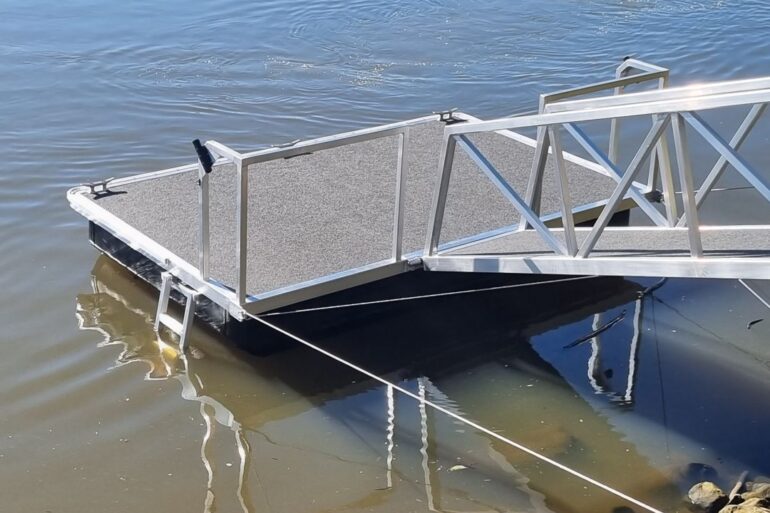
Cable pontoon systems offer a smart and cost-effective docking solution for homeowners looking to enhance their waterfront properties. These pontoons use tensioned cables instead of rigid structures, making them a flexible alternative to piled and strut pontoons. Whether you own a property in a calm canal or a sheltered waterfront area, cable pontoons provide reliable residential pontoon solutions that require less complex installation and site preparation.
This guide answers the most common questions we receive about cable pontoons, covering suitability and permits, installation, maintenance, lifespan, and repairs. It’s designed to help you learn everything you need to know, step by step. We also recommend reading our Guide to Cable Pontoons: Maintenance, Repairs & Best Practices for more advice.
Suitability & Benefits of Cable Pontoons
Cable pontoons are an excellent choice for residential properties where calm water conditions and practical docking solutions are a priority. These pontoons rely on a tensioned cable mooring system to remain stable, instead of using rigid piles or strut arms. Tensioned cables connect the pontoon securely to land-based mooring blocks, allowing the floating dock to adapt to water movement while maintaining its position.
Where are cable pontoons best suited?
Cable pontoons are ideal for calm canals, lakes, and sheltered waterfronts where water remains relatively steady. Their design is perfect for residential boat mooring solutions in areas not exposed to strong tidal forces or significant wave action. If your property sits in a location with gentle waters, a cable pontoon could be the perfect floating dock solution.
Can cable pontoons handle changing tides and water movement?
Yes, cable pontoons can handle moderate tidal changes and water movement efficiently thanks to their flexible mooring system. The tensioned cables move slightly with the pontoon, accommodating variations in water levels. However, they are better suited to areas with minimal wave exposure, as excessive movement from strong currents could affect long-term stability.
Are cable pontoons strong enough to moor boats?
Absolutely. Lightweight and adaptable pontoons like these are reliable for mooring smaller boats and personal watercraft. The tensioned cable mooring system provides sufficient strength to stabilise your dock for everyday residential use. For larger boats or high-traffic docking, more robust options like piled pontoons may be necessary.
Are cable pontoons suitable for rocky seabeds or soft shorelines?
Yes, cable pontoons are an excellent option for properties with rocky seabeds or soft shorelines. Unlike piled pontoons that require heavy drilling into the seabed, cable pontoons use land-based mooring blocks to anchor the floating dock. This design avoids challenges associated with difficult seabed terrain while delivering dependable stability.
Why choose a cable pontoon?
Cable pontoons offer several advantages that make them a popular choice for homeowners. They are cost-effective, as they involve less intensive installation compared to rigid systems. These pontoons are lightweight and adaptable, making them faster and easier to install. Their flexibility also makes them a practical solution for properties with restrictive environmental conditions.
At Micks Marine Maintenance, we specialise in assessing property conditions to recommend the most suitable pontoon for your needs. If you’re considering a cable pontoon, our team can provide professional guidance to ensure you have the best solution for your waterfront lifestyle.
Permits & Regulations
Installing a cable pontoon requires careful attention to pontoon permits and approvals. Most locations mandate permits before installation, and the requirements can vary by region. These regulations aim to ensure floating dock compliance with local marine construction regulations while protecting the environment and maintaining safe waterways.
Do I need council approval to install a cable pontoon?
Yes, council approval is almost always necessary for cable pontoon installation. You will need to submit a tidal works application, which is part of the approval process for waterfront structures. This application ensures your pontoon meets both compliance standards and community regulations.
Learn more about permits and approvals in our Pontoon Dock Buying Guide
What are the legal requirements for mooring a floating dock with cables?
Local marine construction regulations specify that floating docks like cable pontoons must be safely moored and not interfere with waterway navigation. The tensioned cable mooring system must be installed correctly, and the pontoon should abide by guidelines on size, positioning, and clearance from neighbouring structures.
Visit the Gold Coast Waterways Authority website for information about anchoring and mooring rules.
What environmental factors are considered when approving a cable pontoon?
Councils assess several environmental factors before granting approval. They consider the potential impact on marine habitats, tidal flows, and water quality. Quay line restrictions are also reviewed to ensure the pontoon respects property boundaries and doesn’t obstruct other waterfront users.
View the Coastal Protection and Management Regulation 2017 for more information.
Can a cable pontoon be installed on any type of waterfront property?
While cable pontoons suit many waterfront properties, they may not be permitted in all locations. Properties with insufficient quay line space or those in high-traffic waterways could face restrictions. It’s best to consult with experts to determine the feasibility of a cable pontoon for your site.
Also read: our Guide for Gold Coast Waterfront Property Owners
Does Micks Marine Maintenance handle permit applications?
Absolutely. Navigating the tidal works application process can be challenging, but our team can manage it for you. We take care of all paperwork, ensuring your floating dock installation meets compliance requirements and progresses smoothly.
Obtaining council permits and ensuring compliance with local marine construction regulations is vital for cable pontoon installation. By partnering with Micks Marine Maintenance, you gain access to professional support that simplifies the process and ensures your project meets all necessary standards.
Installation Process & Timeline
Installing a cable pontoon involves a straightforward process designed to create a stable and durable floating dock. Each step ensures the floating dock anchoring system is secure and the structure performs reliably over time. Let’s walk through the essential steps and answer some common homeowner questions.
How long does it take to install a cable pontoon?
The time required for a cable pontoon installation usually ranges from a few days to a week. The timeline depends on factors like site conditions, weather, and the complexity of the project. Calm, predictable environments with less preparation needed generally speed up the process.
What are the steps involved in setting up a cable pontoon?
The process begins with a thorough site assessment, where we evaluate the terrain, water conditions, and property layout. Next, we clear and prepare the site, ensuring it’s ready for the pontoon and mooring system. After that, the pontoon mooring blocks are securely installed on land to act as the anchor points. Marine-grade cable attachments are then fastened to these blocks and connected to the pontoon, creating a stable, tensioned system. The culmination of this process is the final alignment and tension adjustment to ensure everything is secure.
What type of anchoring system is used for the cables?
Cable pontoons use a floating dock anchoring system that incorporates pontoon mooring blocks on land. These blocks, often made of concrete or similar durable materials, are specifically positioned to maintain optimal tension in the marine-grade cables. This system holds the pontoon in place without the need for piles.
Can cable pontoons be customised in terms of size and materials?
Yes, cable pontoons offer a high level of customisation. You can adjust the size, decking material, and even add optional features like cleats, fenders, roller systems, or storage components to suit your needs. We work with homeowners to create pontoon systems that align with their property and lifestyle.
Does cable tension need to be adjusted after installation?
Yes, periodic adjustments to the cable tension may be necessary over time. Natural stretching of the marine-grade cable attachments or environmental changes could affect the tension. Regular inspections will help maintain the stability and performance of your pontoon.
At Micks Marine Maintenance, we provide professional cable pontoon installation services across Northern NSW and South East Queensland. Our expertise ensures your pontoon is correctly anchored, tensioned, and aligned to function perfectly in your environment. For a seamless installation that guarantees peace of mind, you can count on us.
Maintenance & Inspections
Proper maintenance is essential to keep your cable pontoon in excellent condition for years to come. Regular upkeep ensures the pontoon remains stable, safe, and reliable. Here’s a guide to maintaining your cable pontoon and the steps you can take to prevent issues.
How often should I check the tension cables?
You should perform tension cable inspections at least twice a year. Seasonal pontoon care, such as checking the alignment and tension of the cables, helps maintain optimum performance. Additionally, inspecting your pontoon after storms or other extreme weather events can prevent future problems.
What are the signs that my cable pontoon needs maintenance?
Look out for rust or damage to the cables, worn brackets, or slack in the cables that could loosen the tension. Deck boards may also show signs of wear, such as cracks or marine growth buildup. If your pontoon shifts position more than usual, it could indicate an issue with the anchoring system or cable attachment points.
Also read: How To Know Whether It’s Time To Repair Or Replace a Pontoon
Do the cables rust or degrade over time?
Over time, cables may experience some level of wear and tear. While marine-grade cables are treated with corrosion-resistant coatings, exposure to saltwater and weather conditions can eventually cause degradation. Regular inspections can catch early signs of wear before it becomes a major issue.
Can I adjust the cables myself, or do I need a professional?
While minor adjustments may seem straightforward, we recommend calling a professional for tension cable inspections and adjustments. Ensuring the proper tension is critical for the pontoon’s stability, and over-tightening or under-tightening can lead to long-term damage or unsafe conditions.
Does Micks Marine Maintenance offer annual pontoon inspections?
Yes, we offer comprehensive annual pontoon maintenance services that include a pontoon maintenance checklist tailored to your system. We check the tension cables, inspect load-bearing points, and carry out an overall inspection of the pontoon. Our team ensures your floating dock remains aligned, secure, and in top condition.
Maintenance Schedule Recommendation
- Every six months: Inspect cables for rust and slack, check deck boards, and remove marine growth.
- Annually: Arrange a professional inspection with Micks Marine Maintenance for load-bearing checks, cable tensioning, and overall system evaluation.
- After extreme weather: Perform spot checks on cables, blocks, and the deck to ensure stability.
At Micks Marine Maintenance, we provide reliable seasonal pontoon care and inspection services to extend the lifespan of your cable pontoon. Our expertise ensures your pontoon stays secure, functional, and ready to use when you need it. Contact us to ensure your system gets the professional care it deserves.
Common Issues & Repairs
Even with regular maintenance, cable pontoons may encounter problems that require attention and timely repairs. Addressing these issues quickly ensures your pontoon remains secure and fully functional. Here’s what to know about common issues and how to fix them.
What should I do if my pontoon moves too much in the water?
Excessive movement in the water is often a sign of slack cables or a shifted mooring system. You should perform a structural stability assessment to identify any loose connections in the cables or mooring blocks. Adjusting the tension in your cables can help realign the floating dock and restore stability. If the issue persists, we recommend scheduling a professional inspection.
Also read: Is Your Pontoon Dock Ready for Summer?
How do I know if my mooring cables need replacing?
You can spot early signs of wear by looking for visible rust, fraying, or weakening in the cables. Over time, exposure to the elements can degrade marine-grade cables, even with protective coatings. If you see these signs or experience reduced tension and stability, it may be time for a mooring cable replacement.
What happens if one of the cables snaps?
A snapped cable can compromise the overall stability of your pontoon. If this happens, you must avoid using the pontoon until the system is repaired. Contact us at 0431 778 468, and we can assess the damage, replace the broken cable, and rebalance the tension to ensure everything is secure.
How can I protect my pontoon from storm damage?
Storms can pose significant risks to cable pontoons, especially in areas prone to high winds or wave surges. Preventative measures, such as installing reinforced cables and storm-resistant anchoring systems, can mitigate damage. Regularly inspect your floating dock for vulnerabilities before stormy weather and ensure all connections are tight and secure.
Can Micks Marine Maintenance repair damaged cables and mooring blocks?
Yes, we specialise in all cable pontoon repairs and can address issues like damaged mooring cables, misaligned docks, or worn-out brackets. Our services include thorough structural stability assessments and floating dock realignment to guarantee long-lasting results. Whether you need reinforcements or complete replacements, our team is here to help.
Cost & Longevity Considerations
Investing in a cable pontoon is a practical and durable solution for your waterfront property. Understanding the costs and lifespan of these durable marine structures can help you make an informed decision. Here’s what you need to know about cost factors and longevity.
How long does a cable pontoon last?
With proper maintenance, a cable pontoon can easily last 20 or more years. Regular inspections, timely tension adjustments, and protection against rust ensure the floating dock remains functional and secure. Its design features, including corrosion-resistant materials, make it an ideal long-term mooring solution.
How much does it cost to install a cable pontoon?
Pontoon installation costs vary depending on several factors, such as the size of the structure, the materials used, the complexity of the mooring system, and site-specific requirements. On average, cable pontoons are more cost-effective than alternatives like piled pontoons, offering comparable strength and stability without the need for fixed piling systems.
Are cable pontoons more affordable than piled pontoons?
Yes, cable pontoons are generally more affordable than piled systems. The simpler anchoring setup means reduced labour and material costs, making this a budget-friendly option for many homeowners. Despite the lower upfront cost, cable pontoons still deliver impressive durability and longevity.
What ongoing costs should I expect for maintenance?
Maintenance expenses for cable pontoons are minimal compared to the initial installation. Over time, you may need to perform cable tensioning or replace worn parts, such as brackets or mooring cables. Scheduling an annual inspection to check the system’s condition is a good way to manage costs and avoid unexpected repairs.
Does a cable pontoon increase my property’s value?
A well-maintained cable pontoon can enhance the usability and appeal of your property. For waterfront homes, having a functional and reliable floating dock adds significant value, particularly for potential buyers who prioritise waterside access and boating facilities.
For landlords, it provides significant value, potentially increasing rental income by an additional $10 to $20 per week.
Read our post, Easy Ways to Increase the Value of Your Waterfront Home, for more information on the property value incentives.
Conclusion
Cable pontoons offer a durable and cost-effective solution for residential mooring needs. They suit a range of waterfront properties and provide lasting value with proper care. With their flexible design, easy installation process, and long lifespan, they remain a popular choice for homeowners looking to enhance their waterfront experience.
To ensure your cable pontoon performs its best, professional installation and regular maintenance are essential. Expert services not only guarantee safety and stability but also extend the lifespan of your pontoon, saving you time and money in the long run.
For expert cable pontoon installation and maintenance in Yamba, Tweed Heads, Gold Coast, Brisbane, Bribie Island, and the Sunshine Coast, contact us today.