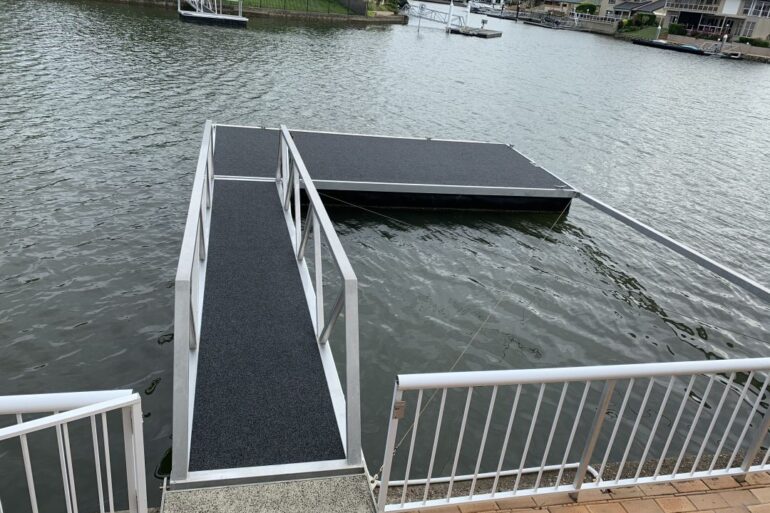
Strut arm pontoons offer a unique mooring solution, but many homeowners have questions about whether they’re suitable for their property. Understanding the specifics—like how they work, what permits are required, and how to maintain them—can feel overwhelming. That’s why we’ve created this guide. Our goal is to answer the most common homeowner questions about strut pontoons, covering topics like suitability, installation, permits, maintenance, repairs, and lifespan.
At Micks Marine Maintenance, we specialise in providing durable and practical residential pontoon solutions. Whether you’re evaluating if a floating dock with strut arms is the right fit or seeking guidance on pontoon permits and approvals, we bring hands-on expertise to every project. Our marine-grade strut pontoons are built to last, and proper maintenance ensures their longevity.
This guide walks you through everything you need to know, from the benefits of strut pontoons to the installation process, compliance requirements, and routine pontoon maintenance and repairs. Let’s start with the first—and most important—question for homeowners, “Is a Strut Pontoon the right choice for me?” Keep reading to discover why these floating docks may be the ideal addition to your waterfront property.
Suitability & Benefits of Strut Pontoons
Understanding the suitability and benefits of Strut Pontoons can help you decide if they are the best choice for your waterfront property. These pontoons are specifically designed for residential dock solutions and offer a versatile option that adapts to different conditions. Below, I’ll answer some common questions to help you determine if a Strut Pontoon is right for you.
What is a strut pontoon, and how does it work?
A strut pontoon is a type of floating dock that stays in place using one or two strut arms attached to a land-based mooring point. The strut arms provide stability and allow the pontoon to move slightly with changes in water levels, such as during tidal movement. Because it isn’t fixed vertically into the seafloor, it is a popular solution for areas with rocky seabeds where traditional piled pontoons cannot be installed.
How does a strut pontoon compare to other types like cable or piled pontoons?
The main difference between strut pontoons, cable pontoons, and piled pontoons lies in how they are anchored. Piled pontoons use vertical piles that are drilled into the seabed, making them an ideal option for rough water conditions. Cable pontoons are held in place with cables attached to mooring blocks, which work best in calm waters or for rocky terrains. Strut pontoons fall in between these options, offering both stability and flexibility where wave-resistant pontoons are needed without the more intrusive installation requirements of piling.
Is a strut pontoon suitable for tidal waterways?
Yes, a strut pontoon is highly suitable for tidal waterways. Its design allows it to rise and fall with fluctuating water levels, making it an excellent floating pontoon for tidal waters. It provides dependable access for various water conditions, provided the location is not prone to heavy currents or strong winds, where piled pontoons may be a better choice.
What are the benefits of choosing a strut pontoon over a traditional fixed dock?
The biggest advantage of a strut arm pontoon is its adaptability. Unlike fixed docks such as jetties, which remain stationary, a floating pontoon adjusts to water level changes. This feature is particularly useful for residential dock solutions in tidal areas. Additionally, the streamlined installation process often makes it a more cost-effective option compared to fixed docks or piled pontoons, and it avoids the need for heavy machinery.
Read our post, Pros and Cons of Strut Arm Pontoons, to also discover their disadvantages.
What size boats can be moored on a strut pontoon dock?
The size of boats a strut arm pontoon dock can accommodate depends on its specific design and load capacity. Typically, these pontoons are custom-built to match the homeowner’s requirements. For example, they can support small recreational boats, personal watercraft like jet skis, or mid-sized vessels, depending on the structural design and strut-arm mooring stability. At Micks Marine Maintenance, we create customised strut pontoons suited to your location, boat size, and docking requirements.
Permits & Regulations
Understanding the permits and regulations for installing a strut arm pontoon ensures hassle-free approval and compliance with local requirements. Below, I’ll address the most common questions about pontoon permits and approvals.
Do I need a permit to install a strut pontoon on my waterfront property?
Yes, installing a strut pontoon typically requires approval from the relevant local council or marine authority. Whether you live in Queensland or NSW, you’ll need to submit an application for prescribed tidal works. This permit ensures compliance with tidal waterway regulations and safety standards. Council approvals for floating docks often include an assessment of environmental factors, such as potential impacts on marine ecosystems, as well as ensuring the structure adheres to load-bearing and design requirements.
What are the local council regulations for pontoons in Queensland and NSW?
Council regulations vary by location. For example, on the Gold Coast, pontoons must remain within your property’s defined quay line, and a minimum clearance to neighbouring boundaries must be maintained. NSW regulations require similar adherence to waterway boundary allocations, while also focusing on tidal waterway compliance, especially in environmentally sensitive areas. Councils in both states often require engineering plans validated by certified professionals to ensure the safety and structural soundness of the pontoon.
Also read: Floating Jetty System Location Considerations
Are there environmental restrictions on installing a pontoon?
Yes, environmental impact considerations play a significant role in the approval process. Councils assess whether the pontoon installation will disturb marine habitats, affect water flow, or encroach on protected seagrass beds. Additionally, Queensland waterways may require a pre-referral response from bodies like the Gold Coast Waterways Authority to ensure the project does not harm the surrounding environment. Proper planning, including the use of marine-grade materials, is essential to minimise environmental disruption.
Does my strut arm pontoon need to meet specific safety or load-bearing standards?
Absolutely. Strut pontoons are assessed for their ability to handle load capacity and withstand tidal movements safely. Engineering specifications must meet load-bearing criteria, as pontoons must support the intended weight of boats and foot traffic. Safety features, such as adequate handrails and proper anchoring, are also non-negotiable. At Micks Marine Maintenance, we ensure all designs adhere to required local marine regulations, ensuring both safety and compliance.
Can Micks Marine Maintenance help with obtaining permits?
Yes, we can. At Micks Marine Maintenance, we take the stress out of the paperwork. Our team handles everything from council applications to environmental compliance checks. We work closely with local authorities in Queensland and NSW, ensuring that your strut arm pontoon meets all council approvals for floating docks and tidal waterway compliance. Whether you need help navigating permit forms or want to ensure your pontoon meets structural requirements, we’re here to assist.
Strut Pontoon Installation Process
Installing a strut pontoon involves several steps that ensure safe functionality and long-term durability. Below, I’ll walk you through the process, timeline, and customisation options available to homeowners.
How long does it take to install a strut pontoon?
The strut pontoon installation timeline depends on factors like site conditions and customisation requirements. On average, the process takes 4–6 weeks from the initial consultation to final adjustments. Specific steps, like obtaining permits and preparing the site for installation, can impact the timeline.
What are the steps involved in the installation process?
The installation begins with a site assessment, where we evaluate factors like water depth, tidal flow, and shoreline conditions. Once we confirm suitability, we design custom-built floating docks tailored to your needs.
- Site Assessment and Design: We determine load requirements and assess tidal patterns to choose the best pontoon layout.
- Permit Processing: Approval for installation goes through local councils to ensure compliance with regulations.
- Shoreline Preparation: We prepare attachment points for strut arms, ensuring the structure aligns with the shoreline securely.
- Pontoon Assembly: Using marine-grade construction materials, the pontoon is built and tested for strength and functionality.
- Installation and Final Adjustments: The completed structure is installed, secured with strut arms, and tested to verify load capacity and stability.
Read our comprehensive strut arm pontoon installation guide for a more detailed look at the process involved.
What type of materials are used in a strut arm pontoon?
Strut pontoons are constructed using marine-grade construction materials, like aluminium or fibreglass-reinforced plastic, which resist corrosion and withstand harsh water environments. The decking often features non-slip, weatherproof materials like composite boards, making the surface highly durable and safe.
Can strut pontoons be customised in terms of size and decking material?
Yes, strut pontoons are fully customisable. Homeowners can select the size of the floating dock and choose from various decking materials to match their aesthetic and functional needs. Whether you need a compact dock for a jet ski or a larger structure for mid-sized boats, Micks Marine Maintenance can tailor the design to fit your specific requirements.
Does the installation process require heavy machinery?
Heavy machinery is usually not required for standard installations, as strut pontoons do not involve drilling piles into the seabed like piled pontoons do. The process relies on precise shoreline attachment for strut arms and assembly techniques suited to your property. This streamlined method further reduces installation time and costs.
Pontoon Maintenance & Repairs
To keep your strut pontoon in top condition, regular pontoon maintenance and repairs are essential. By following a recommended pontoon maintenance schedule and addressing any repairs promptly, you can ensure long-term performance and safety. Below, I’ll outline important tasks and answer common questions.
How often does a strut pontoon need maintenance?
A strut pontoon typically requires maintenance every 6 to 12 months, depending on usage and environmental conditions. High-traffic pontoons or those in tidal waterways may need more frequent attention to prevent wear and tear. An annual inspection is a good rule of thumb for most homeowners to identify potential issues early.
What are the common maintenance tasks for a strut pontoon?
Regular maintenance tasks include strut arm inspections, load-bearing checks, and surface cleaning. Inspections should focus on ensuring the strut arms remain securely attached to the shoreline and that all fasteners are intact. Cleaning the deck surface removes algae, dirt, and debris, while anti-fouling treatments prevent marine growth on the base. Applying corrosion-resistant coatings to metal fixtures also extends the lifespan of the pontoon in saltwater environments.
Do strut arms need to be adjusted over time?
Yes, strut arms may need occasional adjustment. Changes in shoreline stability or water levels can impact anchoring points, requiring repositioning or reinforcement. You should inspect the arms during your maintenance schedule to check for wear or loosening. Adjustments help maintain proper alignment and ensure the stability of the pontoon as it rises and falls with water levels.
What should I do if my pontoon becomes unstable or shifts?
If your pontoon becomes unstable or shifts, it’s vital to address the issue immediately. Check the strut arms, anchor points, and deck connections for damage or loosening. Unstable pontoons may also indicate problems with load distribution, so a load-bearing check is recommended. If you’re unsure how to resolve the issue, contact a professional like Micks Marine Maintenance for expert assistance.
Can Micks Marine Maintenance perform repairs on strut pontoons?
Yes, we can. At Micks Marine Maintenance, we offer mobile pontoon repairs and address common issues like loose strut arms, damaged deck materials, and anchor point adjustments. We also offer scheduled servicing to help homeowners across Yamba, Tweed Heads, Gold Coast, Brisbane, Bribie Island, and the Sunshine Coast maintain their pontoons in excellent condition.
Longevity & Cost Considerations
Investing in a strut arm pontoon is a smart choice for homeowners who value long-term durability and functionality. By understanding the lifespan, costs, and benefits, you can make an informed decision for your waterfront property.
How long does a strut pontoon last?
A strut pontoon can last more than 20 years when well-maintained. The use of marine-grade materials ensures resilience against corrosion, weather elements, and regular use. Proper care, including regular inspections and surface cleaning, extends its lifespan even further.
What factors affect the longevity of a strut pontoon?
Factors like environmental conditions, usage frequency, and maintenance practices influence a pontoon’s durability. Pontoons in tidal waterways or saltwater environments may face more wear, making corrosion-resistant coatings and frequent checks essential. Improper load distribution or neglected repairs, such as loose strut arms or damaged decking, can also reduce the structure’s lifespan.
How much does it cost to install a strut pontoon?
The cost of strut pontoon installation varies based on size, design complexity, and site conditions. Smaller pontoons might start at $15,000 to $20,000, while larger, custom-built floating docks for residential or commercial use can exceed $50,000. This price includes site preparation, materials, and installation. While the upfront cost may seem significant, investing in durable, high-quality components ensures fewer repair expenses over time.
What ongoing costs should I expect for maintenance and repairs?
Ongoing costs mostly include routine maintenance, such as annual strut arm inspections, anti-fouling treatments, and corrosion prevention measures. Typical maintenance might cost around $500–$1,000 per year, with occasional higher expenses if repairs are needed. Addressing issues like loose strut arms early can prevent costly damage, making regular maintenance a cost-effective pontoon solution.
Does a strut pontoon increase my property’s value?
Yes, installing a strut pontoon can increase your property’s value significantly. It adds functional and aesthetic appeal to waterfront homes, attracting buyers who prioritise access to marine infrastructure. Homeowners often see a return on investment for waterfront property improvements in the form of higher resale values. A durable, well-maintained pontoon becomes an asset for both personal enjoyment and property equity.
Conclusion
Strut pontoons offer a practical and durable solution for homeowners looking to enhance their waterfront properties. They provide stability in tidal waters, longevity with proper care, and customisation options to suit various needs. Installing a strut pontoon is a long-term marine infrastructure investment that adds value to your property while offering convenience and functionality.
For expert guidance on strut pontoon installation, maintenance, and repairs in Yamba, Tweed Heads, Gold Coast, Brisbane, Bribie Island, and the Sunshine Coast, trust Micks Marine Maintenance to provide high-quality service. Whether you need custom waterfront docking solutions or reliable strut pontoon maintenance, their professional team is ready to help you every step of the way.
We handle every part of the process, from the initial site assessment to final installation. Backed by decades of experience, we’re proud to deliver high-quality solutions for customers in Yamba, Tweed Heads, and beyond.