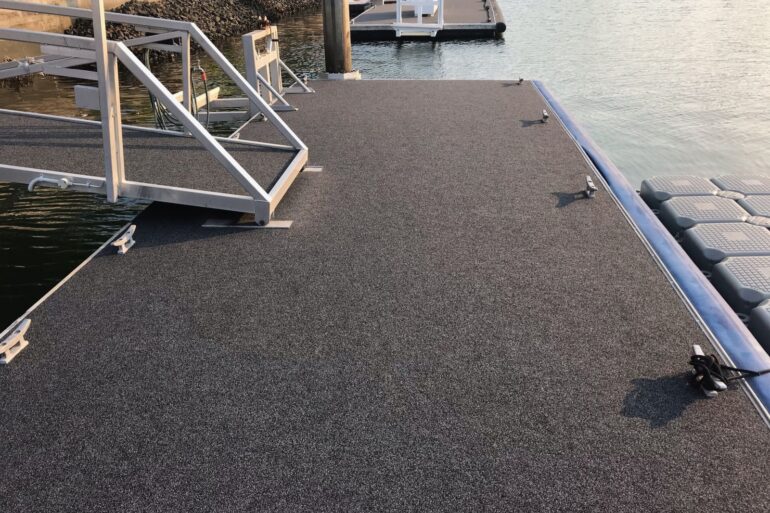
If you’re searching for pontoon recarpeting on the Gold Coast, chances are your pontoon dock or gangway is starting to show the effects of our harsh coastal conditions. Constant sun exposure, saltwater, humidity, and daily foot traffic take a serious toll on marine carpet—causing it to fade, lift, hold moisture, and become slippery underfoot far sooner than most owners expect.
On the Gold Coast, marine recarpeting is rarely just cosmetic. It’s often the first visible sign that a pontoon needs attention to remain safe, structurally sound, and fit for long-term use. What looks like tired carpet on the surface can quickly point to deeper issues beneath—especially on floating pontoons exposed to tidal movement, saltwater saturation, and year-round coastal exposure.
That’s where experience matters. At Micks Marine Maintenance, marine recarpeting and pontoon carpet replacement are handled with a clear understanding of how Gold Coast waterways behave—and why some recarpeting jobs last, while others fail prematurely. Below, we’ll break down why pontoon carpet wears so quickly here, when recarpeting becomes essential, and what makes a professional marine recarpeting job genuinely last in Gold Coast conditions.
Why Pontoon Carpet Fails So Quickly on the Gold Coast
Pontoon carpet on the Gold Coast is exposed to some of the harshest conditions in the country. Constant sun, saltwater, humidity, and regular foot traffic all combine to wear marine carpet down much faster than in sheltered or inland waterways. On floating pontoons, that exposure is ongoing, making carpet failure a matter of when, not if.
The most common reasons pontoon carpet deteriorates so quickly include:
- Intense UV exposure: Strong sunlight breaks down carpet fibres and backing over time, leading to fading, brittleness, and surface wear.
- Saltwater saturation: Salt penetrates the carpet and adhesives, accelerating corrosion and causing materials to degrade from the inside out.
- Trapped moisture and mould growth: Once moisture becomes trapped beneath the carpet, it creates ideal conditions for mould, odours, and a permanently waterlogged feel underfoot.
- Adhesive breakdown: Marine adhesives can fail if the surface isn’t prepared correctly or if materials aren’t suited to coastal conditions, leading to lifting edges and bubbling.
- Hidden deck deterioration: Saturated carpet often conceals rotting plywood or deteriorating pontoon decking, turning a surface issue into a structural risk.
Beyond appearance, these issues introduce genuine safety concerns. Loose carpet edges increase the risk of trips, slippery surfaces raise the chance of falls, and concealed deck damage can compromise the integrity of the entire pontoon.
This is why proper marine carpet installation matters. Addressing the underlying causes—not just replacing what’s visible—ensures the carpet, adhesives, and deck work together as a long-lasting, safe system rather than a short-term fix.
Professional Pontoon Recarpeting vs Patch Repairs
When pontoon carpet starts lifting or breaking down, many owners consider patch repairs as a quick fix. While this can seem cost-effective at first, patching rarely addresses what’s happening beneath the surface—particularly in Gold Coast marine conditions where moisture and salt exposure are constant.
Patch repairs usually focus only on the visible problem area. Underneath, moisture can remain trapped, adhesives may continue to fail, and deck substrates can continue to deteriorate unnoticed. Over time, this often leads to recurring issues, uneven surfaces, and higher overall maintenance costs.
Completely recarpeting a pontoon allows the entire deck to be assessed and prepared correctly before new marine carpet is installed. This approach delivers a safer, more durable result and avoids repeated repairs.
Our Marine Carpet Installation Process
A long-lasting result depends on what happens before the new carpet goes down. Proper marine carpet installation isn’t just “rip and replace”—it’s a process that starts with inspection, preparation, and the use of the right materials for a saltwater environment. Here’s how we approach pontoon carpet replacement so it holds up in real Gold Coast conditions.
- Remove the old carpet and adhesives: We strip the existing carpet and remove old glue and residue so we can see exactly what condition the deck is in. This step also reveals hidden issues that patch repairs often miss.
- Inspect the deck substrate and fixings: Once the surface is exposed, we check the deck substrate and key fixing points for soft spots, rot, corrosion, or movement. If there’s an underlying issue, installing new carpet over the top won’t solve it—so we deal with it properly first.
- Repair or upgrade the deck where required: If the pontoon has timber or plywood that’s deteriorating, we can repair sections or recommend an upgrade. A common improvement is replacing rot-prone plywood with aluminium decking, which delivers a stronger, longer-lasting base and reduces future maintenance. This is a smart option as part of a broader pontoon refurbishment.
- Surface preparation for proper adhesion: We prep the deck so the adhesive bonds correctly across the full surface. Good surface preparation is what stops edges lifting and prevents early adhesive breakdown in humid, salt-exposed environments.
- Apply marine-grade adhesives and fit the new carpet: We use marine-grade adhesives suited to outdoor, wet-area exposure, then professionally fit and lay the new carpet to achieve a clean finish and consistent grip underfoot. Corners, joins, and edges are finished carefully so the carpet sits flat and stays secure.
- Final detailing and quality check: We finish the recarpeting with a final check for adhesion, trip edges, and overall safety. It’s the attention to detail here—especially on joins and high-traffic zones—that makes the difference between a carpet that lasts and one that starts lifting again within a season.
This process is designed to deliver a durable surface that looks sharp, feels safer underfoot, and protects the pontoon structure underneath—rather than simply covering up problems that will return later.
Gangway Recarpeting and Pontoon Access Areas
Gangways almost always wear faster than the pontoon itself. They’re high-traffic areas that flex with tidal movement and take the full load of people stepping on and off, often with wet feet. On aluminium gangways and marine walkways, this constant use quickly breaks down carpet fibres and adhesives.
This is why gangway recarpeting is often carried out alongside pontoon carpet replacement. Restoring the gangway surface improves grip, reduces the risk of slipping at sloped access points, and creates a safer transition between land and water. When both the pontoon and gangway are addressed together, the result is a consistent finish rather than a mix of new and worn surfaces.
Neglected access points are one of the biggest safety risks on any pontoon system. Loose edges, reduced slip resistance, or waterlogged carpet near handrails can quickly lead to trips or falls. Including gangways as part of a broader pontoon carpet repair ensures safer access, better durability, and a more reliable setup overall.
Learn more about our gangway maintenance services.
Servicing Pontoons Across the Gold Coast
We carry out pontoon recarpeting on the Gold Coast with a clear understanding of how local waterways affect marine structures. From residential canal pontoons to riverfront homes, marinas, and commercial pontoon infrastructure, conditions vary widely—and the approach needs to suit the site.
Our team provides mobile marine recarpeting, working on-site to minimise disruption while ensuring the job is done properly. Whether the pontoon dock is tucked into a sheltered canal or exposed to tidal movement and boat wash, we tailor the process to the location rather than applying a one-size-fits-all solution.
Because we work regularly across Gold Coast waterways, we’re familiar with the access challenges, tidal considerations, and safety requirements involved in maintaining waterfront properties. That local experience allows us to deliver reliable results without unnecessary downtime for owners or marina operators.
Why Choose Micks Marine Maintenance for Pontoon Recarpeting
Choosing the right contractor is essential for pontoon recarpeting on the Gold Coast. Experience, materials, and method all play a role in whether a job lasts—or needs redoing far sooner than it should.
At Micks Marine Maintenance, we take a repair-first approach. Where others may recommend full replacement, we often restore and recarpet existing pontoons by addressing the underlying issues. That means properly inspecting the structure, using marine-grade materials suited to coastal conditions, and applying proven installation methods that hold up over the long term.
Our focus is on doing the job once and doing it right. From correct surface preparation to professional marine carpet installation, every step is handled with durability and safety in mind. The result is a pontoon dock that looks better, feels safer underfoot, and continues performing in demanding marine environments—without unnecessary replacement costs.
Get a Quote for Pontoon Recarpeting on the Gold Coast
If your pontoon carpet is lifting, worn, or feeling unsafe, it’s worth addressing it early—before minor issues turn into more costly repairs. We provide pontoon recarpeting on the Gold Coast with straightforward advice, clear pricing, and practical solutions suited to your location and usage.
Quoting is simple. We conduct on-site assessments as needed, inspect the deck and access areas properly, and explain the best way forward—whether that’s a full recarpeting of the pontoon dock or targeted repairs as part of a broader maintenance plan. There’s no obligation, just honest guidance based on experience.
To learn more about our approach and what’s included, visit our Pontoon Recarpeting service page, or get in touch to arrange an inspection. Our team is ready to help you restore safety, appearance, and longevity to your pontoon with minimal disruption.
Learn more about all our pontoon dock services on the Gold Coast.