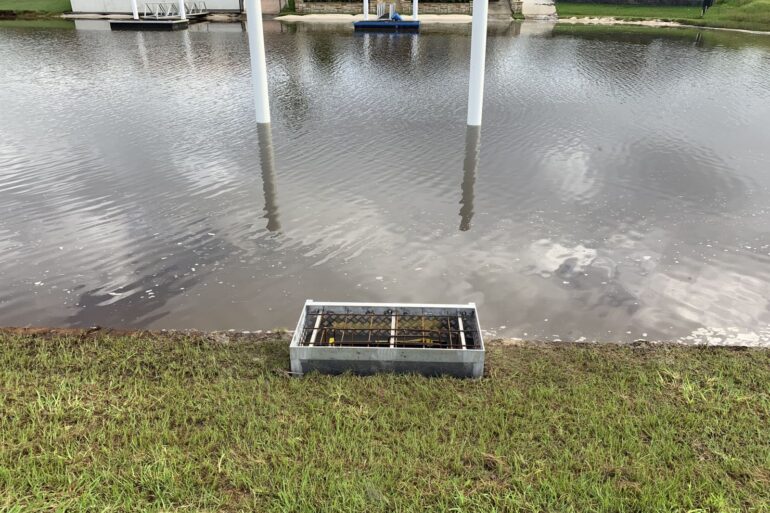
Pontoon piling on the Gold Coast plays a critical role in keeping floating pontoons stable, safe, and correctly positioned in tidal marine environments. Where water movement, changing seabed conditions, and long-term exposure are factors, Gold Coast pontoon piling provides the structural foundation that allows a pontoon to perform reliably over time.
Marine piling involves installing piles into the seabed to anchor a pontoon while still allowing it to rise and fall with the tide. This approach is commonly used for piled pontoons in coastal canals, sheltered waterways, and main river systems where lateral movement needs to be controlled. By transferring loads below the sea bed, piling helps manage movement caused by tides, vessel use, and ongoing environmental forces.
Understanding how pontoon piling works — and when it is suited to Gold Coast conditions — enables more informed decisions about safety, durability, and long-term structural performance.
What Pontoon Piling Is and How It Works
Pontoon piling is a type of marine piling that provides a deep-set foundation to control the behaviour of a floating pontoon in the water. It involves installing piles vertically into the seabed, providing a fixed reference point against which the structure can move rather than drift with changing conditions.
Once the piles are in place, pile brackets are fitted around each pile and connected to the pontoon. These brackets are designed to guide the pontoon up and down as water levels change, allowing vertical tidal movement while maintaining lateral restraint. This combination enables load transfer below the seabed, reducing stress on the pontoon and helping the structure remain aligned during everyday use.
Piled pontoons typically use two or more piles, depending on the pontoon size and site conditions. The number and placement of piles determine how movement is managed and how loads are distributed. This piling approach is also used in other marine structures such as fixed jetties and mooring piles, where long-term positional control and stability are required.
Why Pontoon Piling Is Used in Gold Coast Marine Environments
Marine environments along the Gold Coast present a mix of tidal forces, water movement, and seabed conditions that can influence how a pontoon behaves over time. While some locations are relatively sheltered, others experience regular tidal variation and current flow that make positional control more important for long-term use.
In shallow waters and canal systems, changes in water level can still generate lateral movement, particularly where vessel traffic is frequent. Main rivers introduce additional considerations, including stronger currents and deeper seabed profiles that affect how loads are transferred below the surface. Marine piling is commonly used in these settings to improve seabed stability and maintain consistent alignment for piled pontoons without restricting their ability to move with the tide.
Certain waterfront areas, such as Sovereign Islands and Mermaid Waters, may also require piling solutions that account for local site conditions rather than relying solely on surface-based restraints. By anchoring piles into the seabed, marine piling supports safety, long-term durability, and predictable performance across a range of Gold Coast locations.
Pontoon Piling Systems Used in Marine Construction
In marine construction, different piling systems are used depending on site conditions, loading requirements, and environmental exposure. These can include precast concrete piles, spun concrete piles, and steel piles, each with characteristics that influence how loads are transferred into the seabed and how structures perform over time.
At Micks Marine Maintenance, pontoon piling is carried out using in-situ piling systems. This method is selected for its suitability in tidal marine environments and its ability to be installed with control and consistency in varying seabed conditions.
In-situ piles are installed using a combination of drilling and jetting to achieve the required embedment depth, typically at least 3.5 metres. A PVC sleeve is placed into the seabed, followed by a steel reinforcing spiral. A concrete line pump is then used to deliver a customised concrete mix into the PVC casing, which is left to cure before any connections are made to the pontoon.
This approach allows piling to be formed directly in place, supporting structural integrity, controlled installation, and long-term performance for piled pontoons in marine environments.
Piled Pontoons vs Other Pontoon Systems
Piled pontoons are one of several systems used to manage how a pontoon behaves in the water, but they are not required in every setting. Some pontoon installations rely on alternative restraint methods, such as cables and strut arms, depending on environmental suitability, vessel size, and usage requirements. Marine piling is typically used where greater positional control is needed, while other systems may be appropriate in more sheltered conditions. Selecting the right approach depends on site conditions rather than a single preferred solution.
Read our article, How to Choose the Right Type of Pontoon for more information.
Safety, Compliance, and Structural Standards
Safety and long-term performance in marine structures depend heavily on how piles are designed and installed. In pontoon piling applications, adherence to relevant Australian Standards provides a framework for managing loads, material performance, and installation tolerances in marine environments. These standards help ensure that marine piling work aligns with accepted engineering and safety benchmarks without relying on assumptions or shortcuts.
Correct pile installation on the Gold Coast is essential for maintaining structural integrity over time. Factors such as embedment depth, alignment, and connection detailing all influence how loads are transferred from the pontoon into the seabed. When piles are installed correctly, piling contributes to predictable behaviour under tidal movement and everyday use, supporting both safety and durability.
Inspections and structural checks form part of responsible marine piling practices, allowing installation quality to be verified against site conditions and design intent. By adhering to compliance requirements and sound installation methods, pontoon piling can provide safe access, controlled movement, and reliable long-term performance in marine settings.
Pontoon Piling for Gold Coast Waterfront Properties
Pontoon piling on the Gold Coast is commonly used for domestic waterfront properties where consistent access and controlled movement are important over the long term. In residential settings, private pontoons are often used for small to medium-sized vessels, personal watercraft, or general waterfront access, making stability and alignment key considerations in day-to-day use.
The suitability of piling for a residential pontoon depends on how the pontoon will be used and the site conditions. Factors such as water depth, seabed composition, and exposure to tidal movement all influence which piling approach is best suited to a particular location. Matching the type and number of piles to these conditions helps manage movement without over-engineering the structure.
When properly designed and installed, piling supports long-term performance by maintaining safe access between the pontoon and the shoreline. For domestic applications, this focus on reliability and access safety helps ensure the pontoon remains functional and predictable as conditions change over time.
Learn about our other pontoon services on the Gold Coast.
Pontoon Piling Gold Coast: Site Assessment and Next Steps
The suitability of pontoon piles depends on site-specific conditions rather than a standard approach. Factors such as water depth, seabed composition, tidal movement, and intended use all influence whether our Gold Coast pontoon piling service is appropriate for a particular location. Because these conditions can vary significantly between waterfront properties, assessment plays an important role in informed planning.
Marine piling decisions are best made with a clear understanding of how piles will interact with local conditions over time, including load transfer below the seabed and how the pontoon responds to regular movement. Considering these elements early helps clarify structural suitability and avoids assumptions about piling requirements.
If you are considering pontoon piling on the Gold Coast, the next step is to contact us to arrange a site assessment. This will determine whether piling is suited to your location and intended use.
Contact us to arrange your site assessment today or visit our Pontoon & Jetty Piling page to learn more about our services.