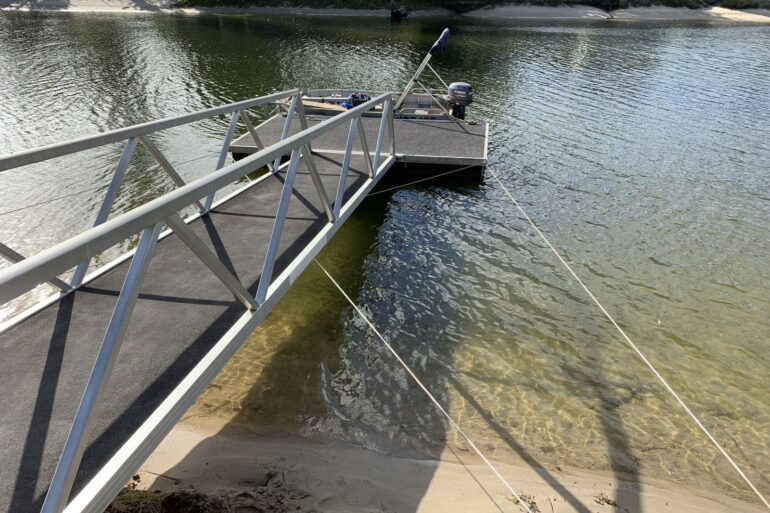
Cable pontoons offer an effective solution for residential docks, small marinas, and private waterfronts. Their flexibility and adaptability to tidal conditions make them a popular choice for property owners looking for cost-effective and reliable docking systems. At Micks Marine Maintenance, we’ve seen how these pontoons excel in providing long-term performance while meeting diverse mooring needs.
The key advantage of cable pontoons lies in their tensioned cable pontoon system. This system ensures stabilisation while allowing the pontoon to move naturally with tidal changes, reducing stress on the structure. With floating docks equipped with cable mooring and adjustable cable supports, you get a practical and durable solution for your waterfront.
However, proper installation is critical to achieving the full benefits of cable pontoons. Without expert installation, issues like uneven load distribution or instability can arise, compromising both safety and functionality. This guide will take you through our new cable pontoon installation process, highlighting key considerations and steps to ensure a successful installation.
Assessing the Installation Site
Before starting the installation of cable pontoons, it’s crucial to evaluate the site to ensure the structure will perform effectively and safely over the long term. We always begin with a thorough site suitability evaluation to identify environmental conditions and structural requirements. This step sets the foundation for a stable and reliable pontoon system.
Key Steps in Site Assessment
- Analyse Water Conditions: We assess wave exposure, current strength, and tidal range through a detailed tidal fluctuation analysis. These factors determine if a cable pontoon system is suitable for the location. Strong currents or significant tidal movements may require reinforced mooring solutions.
- Check Shoreline Stability: Our team investigates potential anchor points along the shore to ensure they are structurally sound and capable of supporting the tension cables. Shoreline stability is critical for achieving pontoon mooring feasibility and preventing long-term integrity issues.
- Assess Load Requirements: We evaluate the expected vessel weight, foot traffic, and how the pontoon will be used. This load-bearing capacity check helps us determine the buoyancy needs and select appropriate anchoring systems.
- Verify Regulatory Compliance: We handle the process of securing council approvals and ensuring the installation complies with marine safety standards. Many locations have strict regulations, so this step prevents delays and ensures the pontoon meets all legal requirements.
Note: Coastal areas like Yamba, Tweed Heads, and the Gold Coast often experience varying water depths and tidal movements. These conditions demand a thorough water depth and current assessment to create a solution tailored for long-term stability.
Preparing the Pontoon Structure & Components
Before installing a new cable pontoon, it’s essential to properly assemble, inspect, and prepare all materials and components. At Micks Marine Maintenance, we know that thorough preparation ensures the structure’s long-term performance and reliability. By focusing on the details during this phase, you can avoid potential issues down the track.
Key Preparation Steps
- Inspect Floating Deck Components: We carefully inspect the decking panels, buoyancy chambers, and the aluminium gangway to ensure they are structurally sound and properly sealed. Non-slip pontoon decking is also checked to confirm it provides safe and durable footing in marine environments.
- Pre-Tension Cables & Brackets: This step involves assembling the cable brackets and marine-grade tension cables. We align the adjustable cable supports to ensure optimal load distribution, which is crucial for maintaining stability and performance.
- Test Load Capacity: We simulate weight distribution on the floating deck to confirm its stability under real-world conditions. This test ensures the pontoon can safely handle expected loads, such as vessel weight and foot traffic, once it’s deployed.
Proper preparation, which includes using high-quality shoreline anchoring hardware and other durable materials, is the foundation for a successful cable pontoon installation. After this, we securely anchor the tension cables to the shoreline to complete the next critical phase.
Anchoring the Tension Cables to Shore
Anchoring the tension cables to a fixed shoreline structure is a crucial step in ensuring your cable pontoon remains stable and functions effectively. We focus on creating a secure anchoring system that accommodates tidal movements while resisting waves and currents. This sets the foundation for a durable, load-bearing cable system.
Key Installation Steps
- Determine Anchor Placement: We begin by identifying reinforced shoreline anchoring points. These could include concrete footings, rock beds, or engineered support beams that provide a stable base for cable mooring installation. Proper placement ensures the cables stay secure under varying conditions.
- Secure Primary Anchors: Our team installs heavy-duty ground anchors or mooring blocks to provide maximum load retention. Using reinforced tension anchors gives the system the stability it needs to endure environmental pressures like wave exposure and current flow.
- Attach Cable Connectors: Next, we connect the cables to the shoreline anchors using marine-grade shackles and tension locks. These components are designed for strength and durability, ensuring the cables stay in place, even under heavy loads or rough conditions.
- Pre-Tension the Cables: We adjust the initial tension levels in the tension cables to reduce slack while still allowing flexibility for tidal movements. This process ensures the pontoon remains stable but can adapt to changes in water levels without becoming overstressed or unstable.
Tip: Stronger tidal flows in areas like Brisbane and Bribie Island often demand reinforced anchoring systems. These additional measures provide enhanced wave and current resistance, making your pontoon more reliable in challenging conditions.
Properly anchoring the cables to the shoreline ensures the entire system operates as intended, supporting both stability and controlled movement. With this step complete, the next task is securely attaching the floating pontoon to the cable system for further stabilisation.
Securing the Floating Pontoon to the Cable System
Connecting the floating deck to the tension cables is a crucial step in ensuring stability and smooth adaptability to water level changes. Proper attachment secures the pontoon against external forces while maintaining its flexibility for tidal movements. Each step plays a part in floating deck stabilisation for reliable performance.
Key Installation Steps
- Align the Pontoon with Cable Brackets: We position the pontoon parallel to the shoreline, carefully ensuring balanced tension on all sides. This alignment prevents uneven strain on the cable system and prepares it for stable operation.
- Attach Brackets to the Pontoon Frame: Our team uses reinforced marine fixings to securely fasten the cable brackets to the pontoon frame. This ensures a strong pontoon-to-cable attachment that withstands marine conditions while keeping all components firmly in place.
- Thread & Secure the Cables: The tension cables are threaded through the brackets and secured in place. We focus on even load distribution across the floating deck to minimise stress on specific sections and maintain stability under variable pressures.
- Adjust Cable Tension: We fine-tune the tension settings to create the perfect balance for controlled movement. Adjustable cable tensioning ensures the pontoon can sway gently with currents and tides without excessive motion or disruption.
Installing the Gangway & Final Adjustments
An aluminium gangway is essential for providing safe access to your cable pontoon while adapting smoothly to changing water levels. At Micks Marine Maintenance, we take care to ensure the gangway is installed securely and operates seamlessly, enhancing both safety and functionality.
Key Installation Steps
- Position the Gangway Properly: We align one end of the gangway with the shoreline support brackets and the other with the floating deck. Accurate positioning ensures stability while accommodating tidal movement adaptation for hassle-free access.
- Install Hinged Connection Points: Using
stainless steelmarine grade aluminium hinges, we attach the gangway at flexible connection points. These hinges form the core of a hinged gangway system, allowing the gangway to pivot naturally with fluctuating water levels. - Secure Handrails & Safety Features: We attach marine-grade handrails and apply non-slip access ramps to enhance safety. These features ensure confident footing, even in wet conditions, and provide added peace of mind for users.
- Verify Smooth Movement: Finally, we test the transition between the gangway and the floating dock. This step confirms seamless movement during tidal changes, ensuring the connection remains stable without any jerking or misalignment.
Tip: Gangways in coastal areas like Tweed Heads and Yamba benefit from reinforced pivot points to handle stronger water currents and ensure long-term reliability.
Final Testing & Safety Inspection
Before wrapping up the installation of any new cable pontoon installation, conducting a thorough safety and performance inspection is critical. At Micks Marine Maintenance, we ensure every aspect of the system is tested and adjusted for long-term reliability and compliance. These checks provide peace of mind and safeguard the pontoon against environmental challenges.
Final Inspection Checklist
- Verify Cable Tension Levels: We carefully check for any loosening or excessive slack in the tension cables. Through tension cable recalibration, we make precise adjustments to maintain the proper balance required for safe operation.
- Inspect All Connection Points: Every bolt, bracket, and fitting undergo a detailed structural integrity assessment. We ensure there are no loose or misaligned components that could compromise the stability or safety of the pontoon.
- Test Pontoon Stability Under Load: Using simulated scenarios, we test the pontoon’s stability under real-world conditions. By mimicking boat docking and foot traffic, we confirm the deck performs well under typical loads, meeting all pontoon safety compliance standards.
- Review Safety Features: Handrails, rope cleats, and non-slip surfaces are inspected to ensure they are securely installed and fully functional. These features are critical for creating a safe environment for users in all conditions.
With every aspect thoroughly inspected and adjusted, your cable pontoon is ready for reliable, long-term use. However, staying on top of your pontoon maintenance requirements will help maintain safety and performance year after year!
Conclusion
Installing a cable pontoon is a step-by-step process that requires careful planning and expert execution. From preparing the materials to securing the pontoon and performing rigorous safety inspections, every detail contributes to a reliable pontoon installation that adapts to your needs. When done correctly, cable arm pontoons provide flexible and cost-effective mooring solutions, ideal for both residential and commercial use.
Proper installation and periodic maintenance are essential for keeping your system safe and functional over the long term. A professionally installed pontoon not only ensures secure marine infrastructure but also offers dependable, long-term docking solutions for various environments. For a deeper look into cable pontoons beyond installation, we recommend reading our Guide to Cable Pontoons: Maintenance, Repairs & Best Practices.
For precise cable arm pontoon installations across Yamba, Tweed Heads, Gold Coast, Brisbane, Bribie Island, and the Sunshine Coast, contact us on 0431 778 468. Our expertise in expert marine construction will guarantee a durable and trustworthy pontoon system you can rely on.